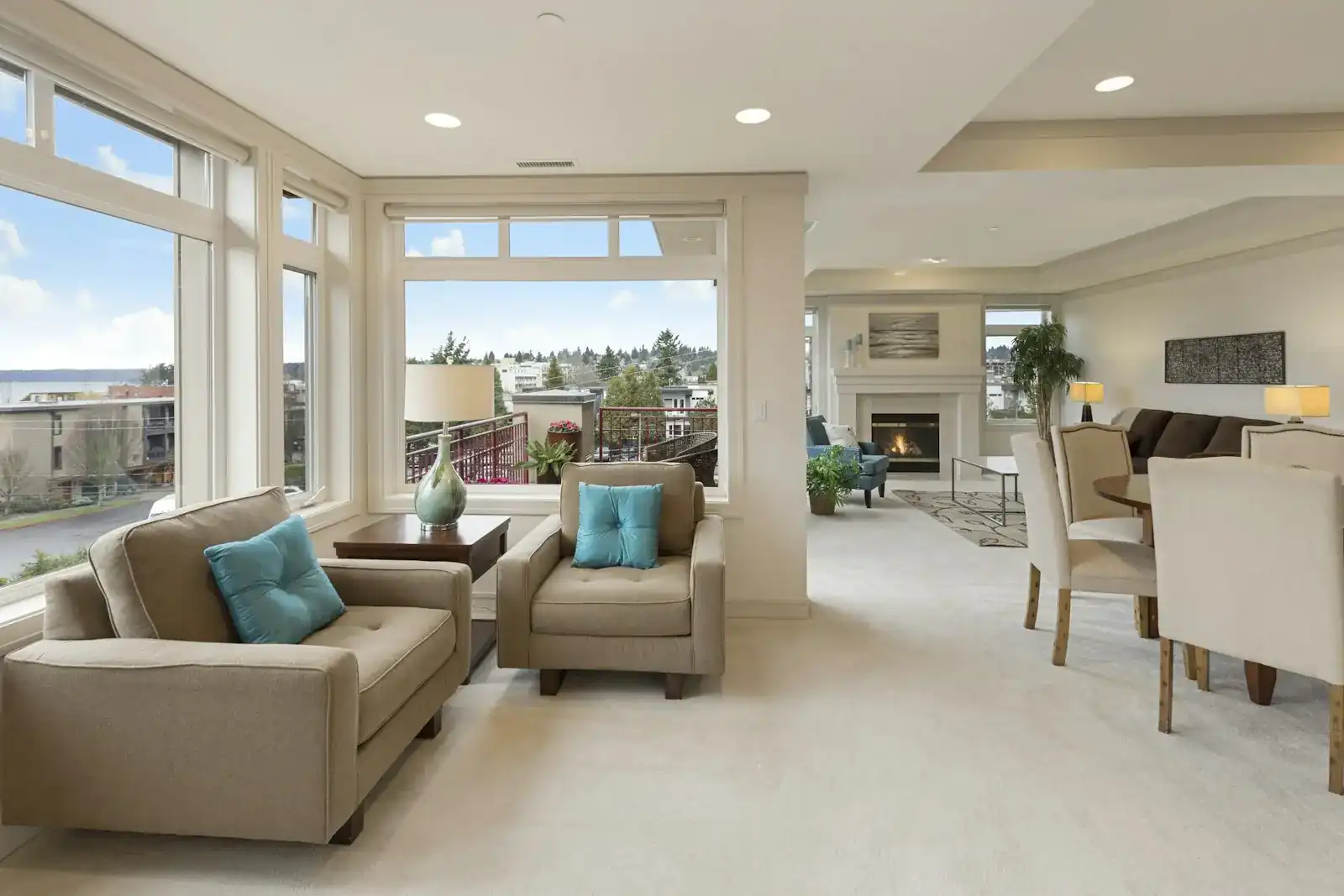
Most sellers in Austin do not move out before the first showing. The kitchen is still a kitchen. The office still has a job. Occupied staging starts from that fact instead of pretending the house is a blank set.
The work is editing and arranging. Pieces are pulled back so the floor and the windows read. Collections are reduced to a few objects. Rooms that have picked up a second use — a dining table that became a desk, a guest room that became storage — are given one use for the listing.
You stay in the home. The plan accounts for school mornings, pets, and the closet you still need. Showings are easier when the edit is something you can keep up for a few weeks, not a scene that collapses the first night.
The work
What occupied staging includes.
- A room list tied to what the photographer will actually shoot.
- Layout changes using your existing seating, tables, beds, and rugs.
- A clear recommendation for what to store off-site or in a closed closet.
- Surface editing in the kitchen, baths, and entry so counters read as usable.
- A note on what daily life should put away before a showing.
- Coordination with the timeline you and your agent already have.
Not included: rental furniture, a delivery truck, installation of a furnishing package, painting, or repairs. If a wall or a floor will dominate the photo, that is named as a separate decision, not quietly absorbed into staging.
Typical situations
When sellers ask for this.
The house has been comfortable for years and now looks crowded in a wide-angle photo. A family is selling and cannot empty the primary bedroom. A home office has to become a bedroom again for the listing, using a bed that is already in the house. Pets have worn a path through the main room and the furniture needs a new arrangement around that fact.
It is a poor fit if you want the home emptied and refilled with a staged collection. That is a different trade. Say so early and the conversation can stay on what this practice does do.
Related pages: consultation if you want the plan without the hands-on day, and pre-listing preparation if the photo date is the real deadline.
How the process runs.
After a request is saved, the first conversation covers who lives in the home, which rooms are public for the listing, and whether anything cannot be moved. A visit, if you want one, looks at light, circulation, and the pieces that are doing too many jobs.
You receive recommendations before the arranging day. The written scope names the rooms, the date, and what you will have put away beforehand. On the day, furniture is moved within the house. Nothing is removed from the property unless you have already arranged storage and asked for that piece to go.
After photographs, you keep a short list of what to reset between showings. The engagement does not include living in the house for you or managing every weekend of open houses.
What affects the scope.
The number of photographed rooms, how much must be stored, stairs, fragile pieces, and how much of the edit has to be reversible every evening. A house that only needs the living room, dining area, and primary bedroom is a smaller project than a house where every bedroom is in the listing. Cost is discussed after that is known. The cost guide explains the factors without a rate card.
Questions about occupied homes
No. Occupied staging is planned for a home that is still being lived in. Daily routines, children, and pets are part of the conversation, not an obstacle that is ignored.
The service uses what you already own. Pieces may be moved, edited back, or recommended for temporary storage. A rental package is not brought in.
Say so at the consultation. Bedrooms in daily use, offices, and storage rooms can be left out of the listing plan or given a lighter edit.